Pig King Early Access Review (2026): 4-Player Hog Brawler Physics, Zombie Pig Comebacks, and Party Night Verdict
Pig King is a $4.97 four-player physics brawler from TwoPeaks, out in Early Access on Steam since November 12, 2026, and it currently sits at 100% positive user reviews. You customize a hog, grab absurd weapons, fight for the Pig Throne, and when you die you respawn as a zombie pig to sabotage everyone still alive. For a party night, that loop is the whole pitch — and it works.
What is Pig King, and why are Steam players calling it a party-night win?
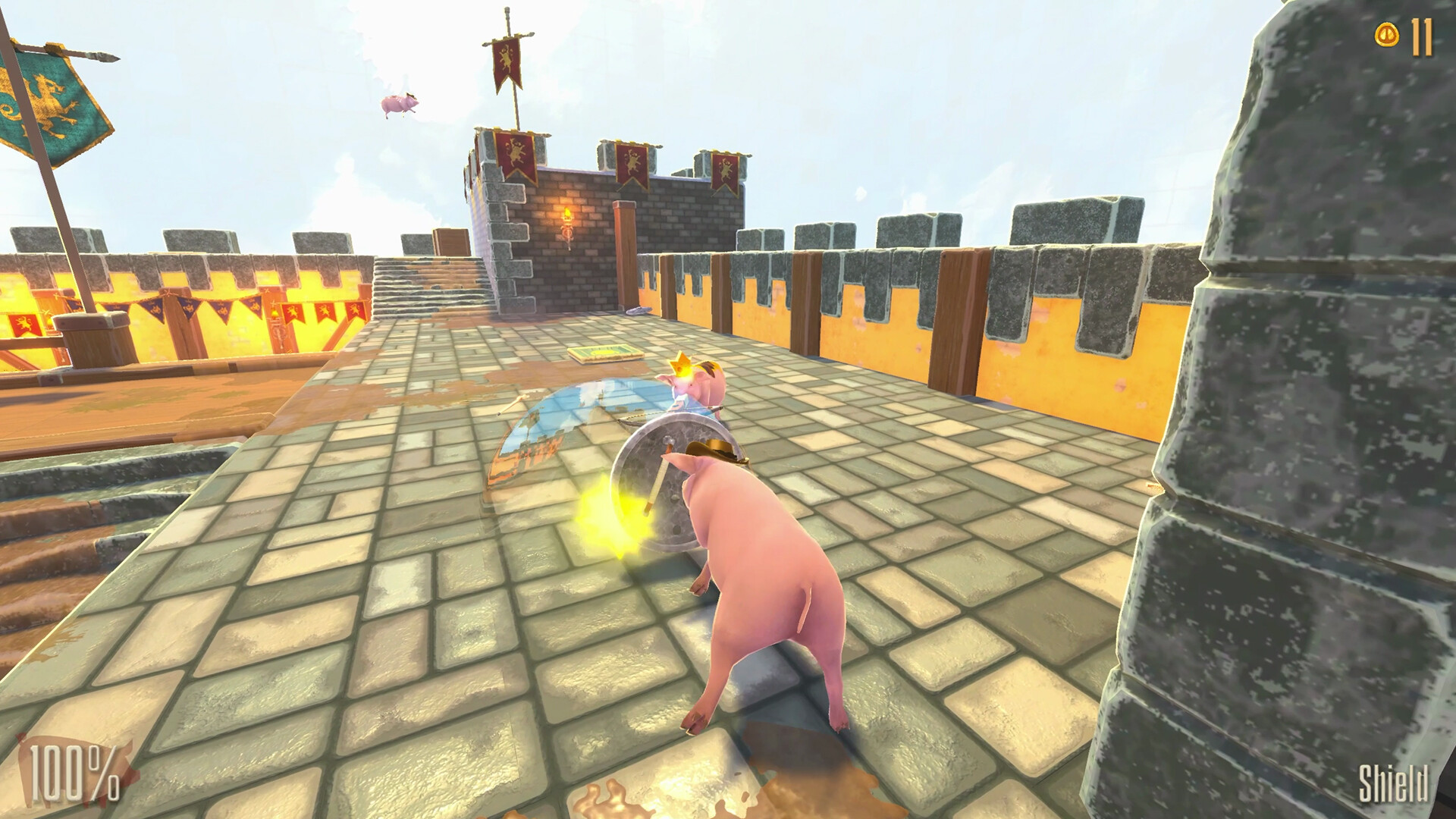
Pig King is an arena party brawler for up to four players where customized hogs battle with ragdoll physics and ridiculous weapons for the Pig Throne, and Steam’s early user reviews are 100% positive as of November 12, 2026. It is listed under Action and Casual, sold in Early Access at $4.97 by developer TwoPeaks.
Here is what the store page promises and what the community actually reacts to. The official premise — “the battle for the pig throne has begun” — is exactly what you get: a small arena, four hogs, and a pile of weapons that behave nothing like weapons should. The part players keep coming back to is not the combat. It is what happens after you lose.
Let me save you the guesswork: this is not a competitive fighter. It is a couch-and-mic chaos generator. If you queue in expecting tight hitboxes and ranked ladders, you will bounce off in twenty minutes. If you queue in with three friends and a Discord call, you will lose an entire evening.
Myth vs. reality: what people assume about Pig King before they buy it
The biggest misconception about Pig King is that it is a skill-based fighting game, when community feedback and the store description both point to a physics-driven party brawler where chaos and betrayal matter more than execution. Most pre-purchase assumptions fall apart the moment you load your first match.
| What people assume | What the game actually is | Why the assumption fails | What to do instead |
|---|---|---|---|
| It is a competitive fighter with tight mechanics | Physics-first party brawler with intentional ragdoll jank | Hitboxes and momentum are loose on purpose; precision is not the point | Play for laughs, not for rank — treat every match as a comedy |
| Dying ends your round | Eliminated players respawn as zombie pigs to sabotage the living | Elimination is a role change, not an exit — you stay in the action | Lean into revenge: coordinate zombie sabotage with the other dead players |
| Proximity voice chat is a nice extra | Proximity chat is a core comedy engine | Half the fun is hearing a rival panic right before a ragdoll launch | Use a mic — playing silent kills the best moments |
| Early Access means it is basically finished | Mech power-ups and stunlock recovery are still being tuned | Balance is actively shifting, so expect swings patch to patch | Report what feels broken; treat the current build as a moving target |
| Four players is optional | The design is built around a full lobby | Fewer hogs means fewer betrayals and a quieter arena | Fill all four slots before you start |
Why the zombie pig respawn mechanic is the smartest thing in Pig King
The zombie pig mechanic turns elimination into a second role: dead players come back as zombies whose job is to sabotage the living, which keeps every player engaged for the entire match instead of sitting out. Community reviews single this out as the standout feature, and it is easy to see why.
Here is the part the tutorial never explains properly: the threat does not stop when you kill someone. When you drop a rival hog, that player is now a zombie with nothing to lose and a grudge. You will be lining up a weapon swing on the last living opponent and get shoved off a ledge by the guy you eliminated thirty seconds ago.
That design choice fixes the biggest problem in every party brawler — the dead-friend downtime where someone is staring at their phone waiting for the round to end. In Pig King, the dead friend is the most dangerous person in the lobby. When you hit the final stretch of a match, you are not just fighting the living. You are fighting everyone you already beat.
How the ragdoll physics and proximity voice chat create the actual comedy
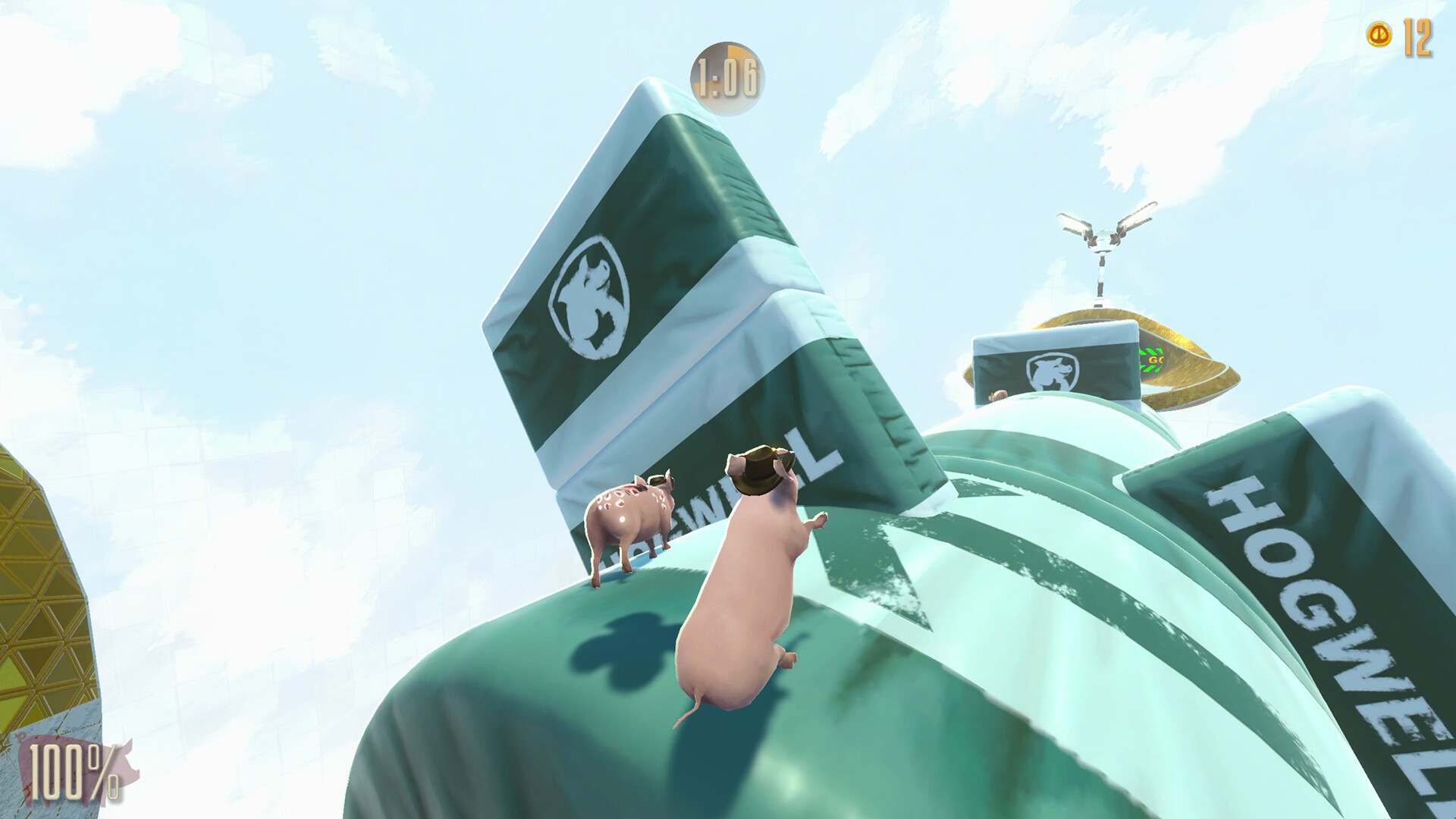
Pig King’s humor comes from two systems working together: loose ragdoll physics that send hogs flying unpredictably, and proximity voice chat that lets everyone hear the panic in real time. Community players highlight both as the reason matches turn into highlight reels.
Physics jank is a feature here, not a bug. Weapons launch hogs at angles nobody planned. Collisions stack into absurd pileups. What the game never spells out is that you should stop fighting the physics and start using them — bait opponents toward ledges, let a heavy weapon’s recoil carry you out of danger, and treat every unstable surface as a trap you can trigger on purpose.
The proximity chat is the multiplier. You hear the yelp when a rival gets launched. You hear the betrayal when a zombie lines up a sabotage. You hear the exact moment someone realizes they are about to lose the throne. Playing with mics off is like watching a comedy with the sound muted — technically the same game, none of the payoff.
What the Early Access build still gets wrong, according to community feedback
Early Access feedback on Pig King flags two areas still being tuned: mech power-ups and stunlock recovery timing, both of which can make certain moments feel unfair or one-sided. The game launched November 12, 2026, so these are expected rough edges rather than finished systems.
Stunlock recovery is the one to watch. When you get caught in a chain of hits, the window to recover can feel inconsistent, and in a four-player pileup that means one bad moment can snowball into a lost round. Mech power-ups are the other moving piece — their strength relative to normal weapons is part of what TwoPeaks is actively balancing.
What you should do instead of getting frustrated: treat the current build as a live test. If a mech feels overtuned or a stunlock feels unescapable, that is exactly the feedback Early Access exists for. The 100% positive reception tells you the core loop is landing even while the numbers get adjusted.
Is Pig King worth $4.97 for your next party night?
At $4.97, Pig King is priced like a snack and delivers a full evening of four-player chaos, making it an easy yes for anyone with three friends and a mic. The 100% positive Steam reception and the zombie pig comeback loop carry it past the Early Access rough edges.
What to look for before you buy:
- You have three friends ready to play. The design is built for a full four-player lobby; fewer hogs means less betrayal and less noise.
- Everyone has a mic. Proximity voice chat is the comedy engine — skip it and you skip the best part.
- You want laughs, not a ladder. This is a physics party brawler, not a competitive fighter.
- You can tolerate Early Access balance swings. Mech power-ups and stunlock recovery are still being tuned.
You can check the official store page and current build notes here: Pig King on Steam (AppID 4563590).
The bottom line on Pig King in Early Access
Pig King is a $4.97 four-player hog brawler where the physics are deliberately stupid, the proximity chat is the real weapon, and dying turns you into a zombie with a score to settle. The 100% positive Steam reception tracks with what the loop actually delivers: chaotic, funny, and built for a full lobby with mics on. The mech and stunlock tuning are the only real caveats, and those are exactly what Early Access is for. Grab three friends, fill all four slots, and play for the betrayal — not the win.
Related reading: New Book Celebrating 45 Years Of The ZX Spectrum Smashes Its Kickstarter Goal Day One.
You might also find this useful: How to Beat the Dreadnought Phase 3 in Doom: The Dark Ages: Weak Points, Parry Timing, and the Weapon Swap That Actually Works.